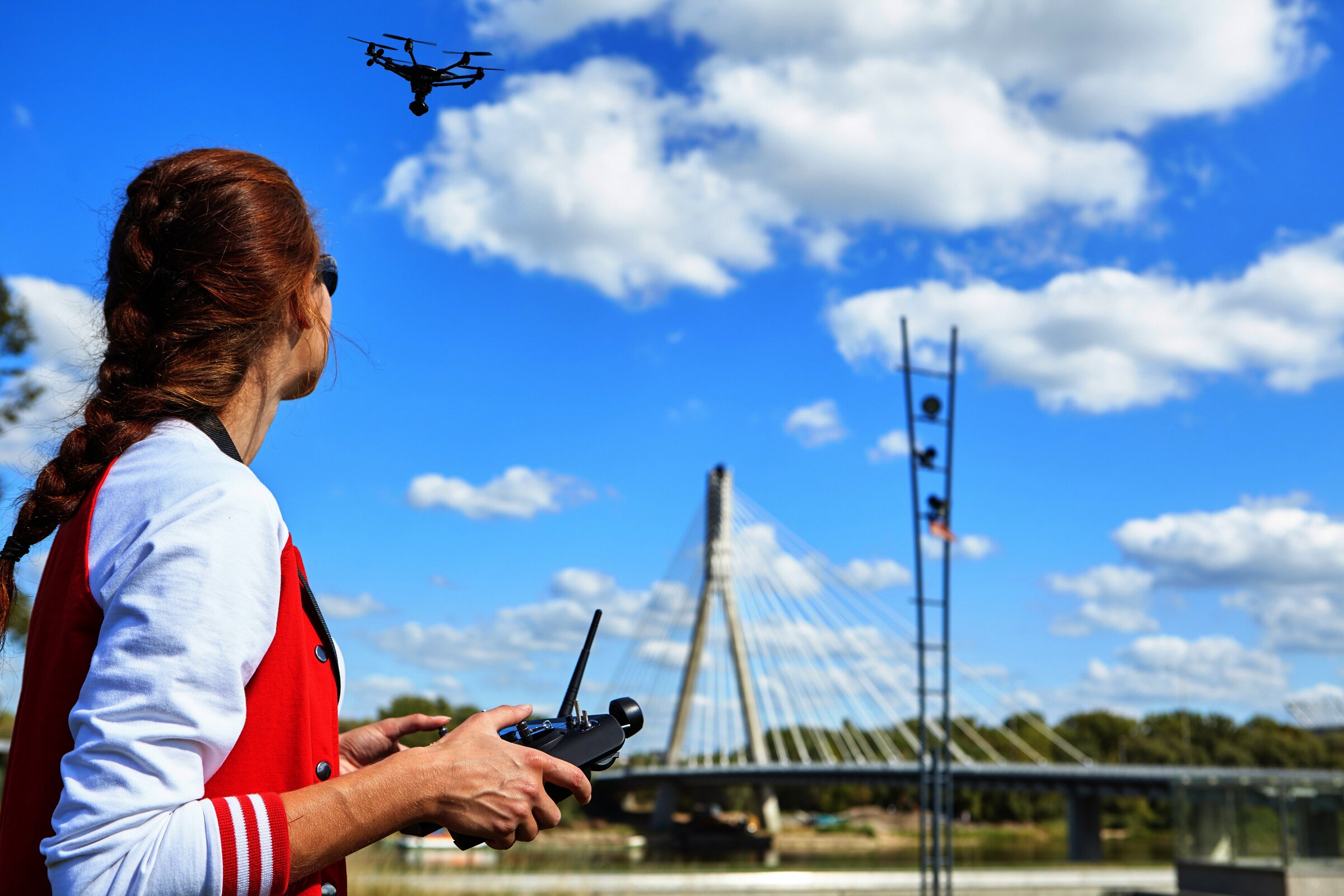
Do I need a pilot license? A question many drone pilots ask themselves.
Since 2020, there has been an EU-wide drone license (EU certificate of remote pilot competency) that may be required for flying drones in European airspace—depending on the intended use, the drone’s weight, and the flight location.
We’ll show you when you need a license, what types are available, and how you can obtain the appropriate certification as a remote pilot.
You do not need a drone pilot's license if:
DMO customers do not need a drone pilot's license if:
Benefit for DMO customers:
Private DMO customers are permitted to fly in Germany in accordance with association rules and do not need to provide proof of competence for models with a takeoff weight of up to 2 kg.
For takeoff weights exceeding 2 kg, a proficiency certificate from the German Model Flying Association (DMFV e. V.) must be obtained (Note: the A1/A3 does not replace this, nor does the DMFV certificate replace the A1/A3!). This regulation applies only to Germany and you must be a resident of Germany.
A drone pilot's license is required if:
However, it is always a good idea to familiarize yourself with the content of the online training course (German)!
How can I get a drone pilot's license?
Do minors have to take a test to fly drones?
If you use your drone exclusively for private purposes in Germany, simplified regulations apply.
Neither a drone pilot license (EU certificate of remote pilot competency) nor a certificate of proficiency is required if you fly only in Germany, your drone or model aircraft has a takeoff weight of less than 250 g, and you do not fly higher than 120 m. Please note: This is the maximum permitted flight altitude for drones anyway. However, we recommend that everyone at least familiarize themselves with the contents of the LBA’s A1/A3 guidelines.
Benefit for DMO customers: Private DMO customers are permitted to fly in Germany in accordance with association rules. In this case, you do not need a certificate of competence for aircraft with a takeoff weight of up to 2 kg—however, we still recommend that you familiarize yourself with the content of the A1/A3.
For models weighing over 2 kg, you must pass the proficiency test administered by the German Model Flying Association (DMFV e. V.). (Note: The A1/A3 does not replace this test, nor does the DMFV test replace the A1/A3!) This regulation applies only in Germany. For flights in all other EU countries, the A1/A3 test remains mandatory.

If you use your drone for commercial purposes or in a volunteer capacity, you need an EU certificate of remote pilot competency (drone pilot license).
This applies regardless of whether you carry out assignments on a regular basis or use the drone only occasionally in a professional or volunteer context.
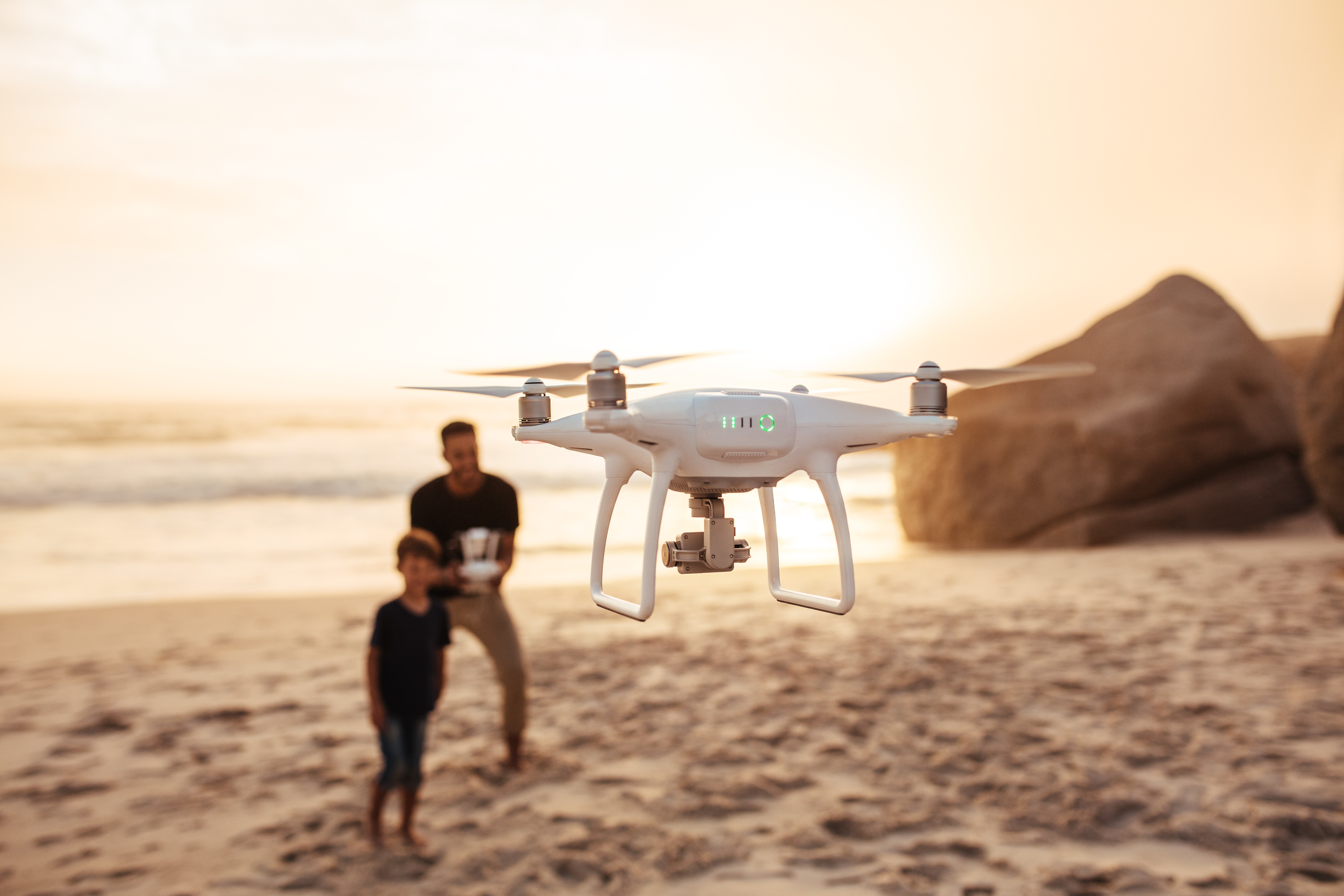
Yes. If you wish to fly in another EU country, you need the EU certificate of remote pilot competency (“drone license”). It does not matter whether you use the drone for personal, volunteer, or commercial purposes.
For flights outside the EU, the relevant local regulations apply. Therefore, please check the regulations in the respective country in advance.
Please observe: For each drone and each model in the EU an insurance is compulsory - regardless of whether you fly for personal, commercial, or volunteer purposes. Appropriate drone liability insurance is therefore required in all cases. Important: If your drone weighs more than 250 grams or is equipped with a camera, you must register as a UAS operator - even for flights within Germany.
Appropriate drone liability insurance:
Private Drone Liability Insurance
Drone Liability Insurance for Businesses and Volunteers
Depending on the intended use and size of the drone, different certifications are required. We can therefore speak of a “small” and a “large” drone license.
In the EU, drone operations are divided into three so-called operation categories according to EU Regulation (EU) 2019/947. These are based on how risky the use of the drone is assessed to be.
The three categories at a glance:
The open category of the drone pilot license is sufficient for most private, commercial, or volunteer operations.
In this case you don’t need a flight permit as long as the local regulations and the drone regulation are observed.
You can make the EU proof of competence (drone pilot license) for the open category.
This is distinguished between different flight plans:
A1: Take-off weight up to 250 g, no flying over crowds,
A3: Take-off weight up to 25 kg, horizontal distance of 150 m to residential, commercial, industrial and recreational areas
A2: Take-off weight up to 4 kg, allows flying in residential, commercial, industrial and recreational areas with a distance of at least 30 m.
Due to that, a combined A1/A3 proof of competence is recommended for most flight plans.
Therefore, the combined A1/A3 certificate of competence is recommended for most flight projects.
EU Certificate of Competence A1/A3 (“Basic Drone License”)
→ Online course and online exam from the Federal Aviation Authority: visit the website (auf Deutsch)
EU Remote Pilot Certificate A2 (“Advanced Drone License”)
→ Advanced theoretical exam at examination centers: List of current offices/examination authorities of the LBA (auf Deutsch)
Note for Minors (Under 16)
Minors must also take the online exam under the conditions listed above. A request must be submitted to create a user account for minors (ages 7–16).
Go to the application form (auf Deutsch)
You will need the limited A2 proof of competence or higher. Additionally, you will need an operating license.
In these cases, operational certification must be obtained from EASA.
Now that you know whether you need an EU certificate of competence—and, if so, which one—you can take the online training and exam directly through the LBA at lba-openuav.de (German).
Of course, we’re more than happy to help with any questions you may have! Feel free to email us or give us a call.
In the EU, all drones and model aircraft are subject to a legal insurance requirement—are you already properly covered?
Informationen zu den EU-Regelungen für Drohnen vom BMVI (German)
Digitale Plattform Umbenannte Luftfahrt vom BMVI (English)
Einordnung des UAS-Betriebes nach aktuellem Recht vom LBA (Betriebskategorien) (German)
Informationen zu den Kompetenznachweisen für Fernpiloten (German)
Online-Training des LBA (German)
If you need a drone pilot’s license but do not have one, you are not permitted to fly the drone in the designated areas. Violations may result in fines, and in the event of damage, you may encounter problems with the claims settlement process.
The EU Certificate of Competence (A1/A3) can usually be obtained within a few hours. After a brief online training course, you will take a written exam. The A2 remote pilot certificate requires additional study.
All remote pilot certificates (A1/A3, A2, or STS for the special category) are valid for 5 years.
(Translated from German)
Informationen zu den Gebühren vom LBA Stand 20.02.2026 (German)
 Deutschland |
 UK |
UK |
 Österreich |
  Belgien |
 France |
  Luxemburg |
  Netherlands |
  Spain |